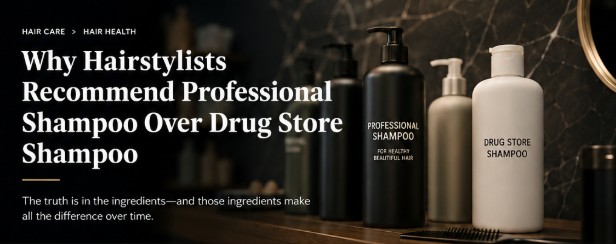
Walk into nearly any men’s hair salon, and one of the first recommendations a hairstylist will make after a haircut or scalp consultation is professional shampoo for men. For many consumers, especially men, the immediate reaction is often skepticism. Shampoo is shampoo, right? How different could they really be? A bottle of shampoo from the drug store costs ten dollars, and a bottle from a hair salon costs thirty dollars. The hairstylist is just trying to make their commission, right?
The reality is that the formulation of shampoo for men is far more complex than most consumers realize. Professional shampoos and mass-market drug store shampoos are often designed with entirely different:
- Priorities
- Ingredient quality standards
- Concentration levels
- Cleansing systems, and
- Long-term hair and scalp goals
While not every salon shampoo is automatically superior, and not every drugstore shampoo is bad. There are just meaningful differences that can significantly affect the condition of the hair and scalp over time. For men, especially, the conversation around shampoo ingredients is becoming increasingly important. Men tend to wash their hair more frequently than women and often use stronger styling products. They sweat more during physical activity and have higher scalp oil production. Both of which are due to testosterone. Lastly, men are statistically more likely to experience hair thinning or loss over their lifetimes.
Because shampoo is used consistently and repeatedly over years or decades, the ingredients chosen matter
Shampoo For Men Hair and Scalp Factors
A professional hairstylist is not simply recommending a more expensive bottle for retail profit or commission. In many cases, they are simply recommending products formulated to:
- Preserve scalp balance
- Maintain the integrity of the hair fiber
- Protect hair color
- Reduce irritation
- Support healthier styling results, and
- Minimize long-term damage caused by harsh cleansing systems
Understanding the differences between professional and drugstore shampoos for men can help consumers make more informed decisions about their hair care routines, scalp health, and long-term hair quality.
Understanding What Shampoo For Men Actually Does
To understand why shampoo formulations matter, it is important to first understand the purpose of shampoo itself. Shampoo for men is designed to remove dirt, oil, sweat, dead skin cells, pollution particles, styling product buildup, and microorganisms from the scalp and hair shaft. However, cleansing the hair is not as simple as stripping away oils.
Healthy hair and scalp function depend on balance
The scalp naturally produces sebum, an oil secreted by sebaceous glands that helps lubricate the scalp and protect the hair fiber. The scalp also has a protective microbiome composed of bacteria and fungi that helps maintain skin health. The hair cuticle, the outermost layer of the hair shaft, must remain smooth and intact to preserve moisture, shine, elasticity, and strength.
A shampoo that is too harsh can disrupt this balance by:
- Over-stripping natural oils
- Causing scalp dryness or irritation
- Triggering excess oil production as compensation
- Weakening the hair cuticle
- Fading hair color faster
- Increasing frizz and breakage
- Disrupting the scalp microbiome
- Creating inflammation that may negatively affect scalp health
A shampoo that is too heavy or poorly formulated can also create problems by:
- Leaving residue buildup
- Weighing down the hair
- Clogging follicles with excess residue
- Making fine hair appear greasy
- Interfering with scalp exfoliation
- Contributing to scalp odor or flaking
The best shampoos for men are designed to cleanse effectively while preserving the scalp and hair’s natural protective systems.
Difference Between Professional and Drug Store Shampoo for Men
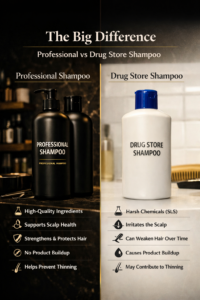
The biggest difference between professional and drugstore shampoo isn’t always the label. It is a formulation philosophy. Professional haircare brands are generally designed with performance, treatment support, and long-term hair quality in mind. Many are developed for use in salons where hairstylists must:
- Protect color services
- Chemical treatments
- Scalp health
- Styling results
Drug store shampoos are typically designed for mass-market appeal. Their goals often include:
- Lower manufacturing costs
- Longer shelf life
- Strong lather for consumer satisfaction
- Strong fragrance appeal
- High-volume retail distribution
- Broad cleansing capability for the average consumer
Because of these goals, many drug store shampoos rely more heavily on inexpensive cleansing agents, fillers, synthetic fragrance systems, and silicone coatings. These cleansing agents create immediate cosmetic softness while potentially contributing to buildup over time.
Professional shampoos, by contrast, often prioritize:
- More balanced surfactant systems
- Higher-quality conditioning ingredients
- Lower pH formulations
- Color protection
- Scalp compatibility
- Concentrated formulas
- Hair structure preservation
- Customization for specific hair types and scalp conditions
Again, not every professional shampoo is perfect, and not every drug store shampoo is poor quality. There are excellent formulations at multiple price points. However, the average salon shampoo and the average mass-market shampoo are usually built differently.
The Cleansing Agents: Sulfates and Surfactants
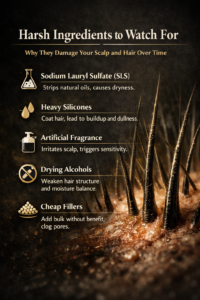
One of the biggest ingredient differences between professional and drugstore shampoo lies in the cleansing agents, known as surfactants. Surfactants are the ingredients responsible for removing oil and dirt. They allow water and oil to mix so debris can be washed away.
Common Surfactants Found in Drug Store Shampoos
Many traditional drug store shampoos rely heavily on stronger sulfate-based surfactants, such as:
- Sodium Lauryl Sulfate (SLS)
- Sodium Laureth Sulfate (SLES)
- Ammonium Lauryl Sulfate
- Ammonium Laureth Sulfate
These ingredients are inexpensive, highly effective cleansers that produce abundant foam. Consumers often associate heavy lather with cleanliness, which is one reason these ingredients became popular.
However, stronger sulfate systems can also:
- Strip natural oils aggressively
- Dry out the scalp
- Fade hair color more rapidly
- Increase scalp sensitivity
- Cause irritation in some individuals
- Roughen the hair cuticle
- Contribute to frizz and breakage over time
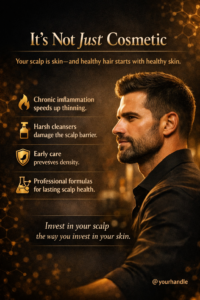
Men who shampoo daily, especially those who exercise frequently or use styling products, tend to shampoo more often. Repeated exposure to harsh surfactants can gradually compromise scalp balance. Repeated exposure to harsh surfactants can disrupt the scalp’s natural barrier, leading to dryness, redness, and micro-inflammation. This disruption allows irritants and allergens to penetrate more easily, worsening scalp conditions like itching and flaking.
Surfactants Commonly Used in Professional Shampoos
Professional shampoos may still contain sulfates, but they often use milder or more balanced cleansing systems such as:
- Sodium Cocoyl Isethionate
- Cocamidopropyl Betaine
- Sodium Lauroyl Methyl Isethionate
- Decyl Glucoside
- Sodium Lauroyl Sarcosinate
- Coco Glucoside
These surfactants are often gentler on the scalp and hair shaft while still cleansing effectively.
The result is usually:
- Less moisture loss
- Better cuticle preservation
- Reduced irritation
- Improved softness
- Better color longevity
- More balanced scalp oil production
Professional formulations frequently combine multiple surfactants to create a more sophisticated cleansing system rather than relying on a single aggressive detergent. This approach helps protect the scalp’s natural balance.
Silicone Content and Hair Coating Ingredients
Another major difference involves silicone use. Silicones are ingredients that coat the hair shaft, creating smoothness, shine, and softness. Common silicones include:
- Dimethicone
- Cyclopentasiloxane
- Amodimethicone
- Trimethicone
Silicones are not inherently bad. In fact, many professional shampoos and conditioners use high-quality silicones strategically to protect the hair.
The difference often lies in the type, amount, and balance of the formula.
Drug Store Shampoo Silicone Issues
Many lower-cost shampoos use heavier silicone systems that create immediate cosmetic softness. The hair feels silky after one use, which consumers often perceive as healthier hair. However, excessive silicone buildup over time may:
- Weigh the hair down
- Create dullness
- Make fine hair appear limp
- Prevent moisture penetration
- Require stronger detergents for removal
- Create dependency cycles where hair feels rough without the coating
Men with fine or thinning hair may notice this problem in particular because buildup can make hair appear flatter and less voluminous. This occurrence could be the reason many men resort to the “no-poo” trend. The “no-poo” trend is where people use shampoo less frequently or not at all. A lot of men feel that when their hair is clean, it is flat or has no volume. A heavy silicone system in a shampoo for men could be the reason for this.
Professional Silicone Systems
Professional brands often use lighter or more targeted silicone systems designed to:
- Reduce friction
- Protect from heat styling
- Improve combability
- Minimize breakage
- Smooth damaged cuticles without excessive buildup
Many professional lines also offer silicone-free options for sensitive scalps or fine hair types.
Protein Quality and Hair Repair Ingredients
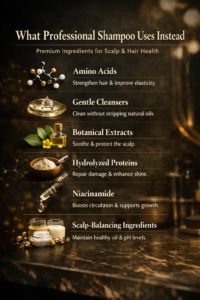
Hair is primarily made of keratin protein. When hair is damaged by heat, chemical processing, UV exposure, friction, or environmental stress, proteins and amino acids can temporarily reinforce weak areas. Professional shampoos frequently contain:
- Hydrolyzed keratin
- Hydrolyzed wheat protein
- Silk amino acids
- Rice protein
- Quinoa protein
- Bond-building technology
These ingredients are often included in meaningful concentrations designed to support damaged hair.
Drugstore shampoos may advertise protein on the label, but the concentrations are often much lower or included primarily for marketing purposes.
Over time, better protein balance can improve:
- Elasticity
- Strength
- Shine
- Resistance to breakage
- Styling performance
This becomes especially important for men who color their hair, use heat tools, spend significant time in the sun, or wear tight hairstyles that stress the hair shaft.
pH Balance and Why It Matters
One of the most overlooked differences between professional and drugstore shampoo for men is pH. Healthy hair and scalp generally function best in a slightly acidic environment, typically around pH 4.5-5.5.
Professional shampoos are often formulated within this range because acidic formulas help:
- Keep the cuticle smooth
- Reduce frizz
- Preserve moisture
- Protect color
- Maintain scalp barrier function
- Increase shine
Many cheaper shampoos can be more alkaline.
When hair is repeatedly exposed to high-pH products, the cuticle can swell and lift. Over time, this may lead to:
- Increased tangling
- Rough texture
- Moisture loss
- Color fading
- Weakness and breakage
Fragrance Systems and Scalp Sensitivity
Fragrance is one of the most common causes of cosmetic irritation.
Drug store shampoos often rely heavily on strong synthetic fragrance systems because scent strongly influences purchasing behavior. Many consumers equate a strong fragrance with cleanliness.
However, excessive fragrance exposure may contribute to:
- Scalp irritation
- Dryness
- Redness
- Itching
- Flaking
- Allergic reactions
Professional brands are not automatically fragrance-free, but many higher-end lines use more refined fragrance systems or offer sensitive-scalp alternatives.
For men with dandruff, seborrheic dermatitis, eczema tendencies, or scalp inflammation, fragrance sensitivity can become a major issue.
Men who experience scalp issues with bottled shampoos should consider a shampoo bar.
Preservatives and Formula Stability
Both professional and drug store shampoos require preservatives to prevent bacterial contamination.
Common preservatives may include:
- Phenoxyethanol
- Sodium benzoate
- Potassium sorbate
- Ethylhexylglycerin
The difference often lies not in whether preservatives are used, but in overall formula sophistication and ingredient compatibility. Some low-cost formulations rely on harsher preservative systems or lower-quality raw materials to reduce manufacturing costs. Professional formulas may invest more heavily in ingredient stability testing, texture refinement, and scalp compatibility.
Concentration Levels and Product Dilution
One reason professional shampoo costs more is concentration. Many salon shampoos are formulated with higher concentrations of active ingredients and lower water dilution levels. This means consumers often need less product per wash. Drug store shampoos may appear less expensive upfront, but may require larger amounts to achieve the same cleansing effect. This is one reason hairstylists frequently tell clients that a professional bottle lasts longer than expected when used correctly. Overusing shampoo, which many consumers do unintentionally, can also contribute to unnecessary scalp stripping.
The average-size bottle of salon-quality shampoo is 10.1 ounces and costs around $24.00, though prices can be higher. Drugstore shampoo bottles average about 8 ounces and are priced between $10.00 and $12.00. A 10.1-ounce bottle of professional salon-quality shampoo can last at least 75 days when used correctly (which means using a bean-sized amount). Drugstore shampoo, at 8 ounces, lasts about 21 days due to its lower concentration. Shampoo for men professional versus drugstore cost breakdown when used correctly:
- $30/75 uses = $0.40 per shampoo – 5 bottles per year = $150
- $10/21 uses = $0.48 per shampoo – 17 bottles per year = $170
This breakdown is being generous with the cost of each bottle and uses per bottle. When used optimally, a 10-oz salon-quality shampoo could even last up to 90 days.
Long-Term Effects on the Hair and Scalp
The true difference between professional and drugstore shampoo is usually not apparent after one wash. The difference becomes more apparent over months and years of repeated use.
Potential Long-Term Effects of Harsh or Poorly Balanced Shampoo
Repeated exposure to overly aggressive cleansing systems may contribute to:
- Chronic scalp dryness
- Excessive oil rebound
- Scalp inflammation
- Hair fragility
- Dullness
- Increased breakage
- Reduced color longevity
- Frizz
- Weakened curl patterns
- Scalp sensitivity
- Product buildup cycles
For some men, persistent scalp irritation may even create an environment less supportive of optimal hair growth. While shampoo alone does not directly cause male pattern baldness, chronic inflammation and scalp imbalance may negatively affect overall scalp health.
Potential Long-Term Benefits of High-Quality Professional Shampoo
Consistent use of well-formulated professional shampoo may help support:
- Healthier scalp balance
- Better moisture retention
- Improved manageability
- Reduced irritation
- Better styling performance
- Enhanced shine
- Stronger-feeling hair
- Better protection for color-treated hair
- Reduced mechanical damage during styling
Again, results depend on selecting the right formula for the individual.
Men Should Care About Shampoo For Men Ingredients

Men are often conditioned to think shampoo is simply about cleanliness. In reality, men may benefit more from ingredient awareness than women.
Men Tend to Wash More Frequently
Many men shampoo daily, sometimes even twice, after workouts. Frequent washing means repeated ingredient exposure. If the shampoo is overly harsh, the scalp experiences cumulative stress over time.
Daily use of aggressive detergents can create a cycle where:
- The scalp is stripped excessively.
- The scalp compensates by producing more oil.
- The hair feels greasy faster.
- The person shampoos even more frequently.
- The cycle repeats.
This can lead men to believe they naturally have excessively oily hair, when in reality, the cleansing routine itself may be contributing.
Men Produce More Sebum
Androgen hormones, such as testosterone and dihydrotestosterone (DHT), cause men to produce more scalp oil than women do. This increased oil production makes balanced cleansing especially important. Using harsh shampoos may worsen oil imbalance rather than improve it.
Men Experience Higher Rates of Hair Loss
Most men will experience some degree of hair thinning during their lifetime. While shampoo alone cannot prevent genetic hair loss, scalp health still matters.
A healthy scalp environment may help support:
- Reduced inflammation
- Better moisture balance
- Healthier follicular surroundings
- Reduced irritation from styling products
- Better tolerance for treatment products
Men investing in topical hair growth treatments such as minoxidil also benefit from maintaining a cleaner, healthier scalp environment.
Men Often Ignore Early Scalp Symptoms
Many men normalize symptoms such as:
- Flaking
- Itching
- Tightness
- Excessive oiliness
- Redness
- Burning sensations
- Product buildup
These symptoms may indicate that the scalp barrier is compromised or that the current shampoo is not appropriate. Professional hairstylists are trained to observe these signs and recommend more suitable cleansing systems.
Men Use More Styling Products Than They Realize
Non-water-soluble hairstyling products such as pomades, clays, gels, texture sprays, dry shampoos, sea salt sprays, and waxes can accumulate on the scalp and hair shaft. This is especially true if the styling product is of low quality.
Poor-quality shampoo may either:
- Fail to remove buildup adequately
- Or overcompensate with harsh detergents that strip the scalp
Professional shampoos are often better formulated to remove styling residue without aggressively disrupting scalp balance.
The Pros of Professional Shampoo For Men
1. Better Ingredient Quality
Professional brands often use higher-quality raw materials and more sophisticated formulation systems.
2. More Customized Solutions
Salon shampoos are frequently designed for specific concerns, such as:
- Oily scalp
- Dry scalp
- Color-treated hair
- Fine hair
- Curly hair
- Thinning hair
- Sensitive scalp
- Dandruff-prone scalp
3. Better pH Balance
Professional formulas are often optimized to preserve cuticle integrity and scalp comfort.
4. More Concentrated Formulas
Less product is usually required per use.
5. Better Long-Term Hair Feel
Rather than creating temporary softness with heavy coating ingredients, many professional shampoos aim to improve hair condition over time.
6. Color Protection
Professional shampoos are generally far safer for color-treated hair.
7. Scalp Health Support
Many professional formulas include soothing ingredients such as:
- Niacinamide
- Aloe vera
- Tea tree oil
- Panthenol
- Zinc PCA
- Peppermint extract
- Salicylic acid
8. Professional Guidance
A stylist can recommend formulations based on actual scalp and hair analysis rather than marketing claims.
The Cons of Professional Shampoo For Men
1. Higher Cost
Professional shampoo is usually significantly more expensive upfront.
2. Overwhelming Variety
Consumers may feel confused by the large number of salon product options.
3. Some Professional Brands Still Use Harsh Ingredients
Not all salon products are automatically superior. Some still contain strong sulfates, heavy fragrance, or excessive silicones.
4. Counterfeit Risk Online
Professional products purchased from unauthorized sellers may be counterfeit, diluted, or expired.
5. Trial and Error
Finding the right professional formula may take experimentation.
The Pros of Drug Store Shampoo For Men
1. Lower Cost
Drug store shampoos are affordable and accessible.
2. Convenience
They are widely available in grocery stores, pharmacies, and major retailers.
3. Large Selection
Consumers have many scent and formula choices.
4. Some Modern Drug Store Brands Have Improved
The clean beauty movement has pushed some mass-market brands to improve the quality of their ingredients.
Certain drug store shampoos now offer:
- Sulfate-free formulas
- Silicone-free options
- Scalp-focused ingredients
- Fragrance-free alternatives
5. Effective Clarifying Ability
Some stronger drug store shampoos can effectively remove heavy buildup when used occasionally.
The Cons of Drug Store Shampoo For Men
1. Harsher Cleansing Systems
Many mass-market formulas still rely heavily on aggressive detergents.
2. Lower Ingredient Concentration
Some formulas are heavily diluted and require more product.
3. Heavy Silicone Dependence
Temporary softness may mask underlying dryness or damage.
4. Strong Fragrance Systems
Fragrance-heavy products may irritate sensitive scalps.
5. Less Customization
Many formulas are designed for broad mass appeal rather than individualized scalp needs.
6. Faster Color Fading
Drug store shampoos often strip color-treated hair more aggressively.
7. Potential Buildup Cycles
Heavy coating agents, combined with harsh detergents, can lead to repeated buildup and stripping cycles.
The Truth About Sulfate-Free Shampoo
Sulfate-free shampoo has become one of the biggest trends in haircare. However, sulfate-free does not automatically mean better. Some sulfate-free shampoos cleanse poorly and leave buildup behind. Others compensate with alternative detergents that may still be irritating. The real goal is balanced cleansing.
A good shampoo should:
- Remove excess oil and buildup effectively
- Preserve scalp comfort
- Protect the cuticle
- Support hair manageability
- Match the user’s scalp type and lifestyle
For men who use significant styling products, occasional stronger cleansing may still be beneficial.
How Hairstylists Evaluate Shampoo for Men Recommendations
A skilled hairstylist typically evaluates multiple factors before recommending shampoo, including:
- Scalp oil production
- Scalp sensitivity
- Hair density
- Hair texture
- Curl pattern
- Color services
- Heat styling frequency
- Environmental exposure
- Exercise habits
- Product usage
- Age-related changes
- Hair thinning concerns
This individualized approach is one reason professional recommendations often outperform random product selection.
Signs Your Current Shampoo For Men Isn’t Working
A person may benefit from switching shampoos if they experience:
- Persistent itching
- Tight scalp sensation
- Excessive oiliness shortly after washing
- Dry ends with oily roots
- Heavy residue feeling
- Dullness
- Increased tangling
- Flaking
- Redness
- Increased breakage
- Hair that feels coated or limp
- Difficulty styling
These symptoms do not always indicate poor-quality shampoo, but they may indicate that the formula is incompatible with the individual’s scalp or hair type.
The Growing Shift Toward Scalp Wellness

Modern hairstyling increasingly recognizes that scalp health is foundational to healthy hair.
Consumers are becoming more educated about:
- The scalp microbiome
- Inflammation
- Barrier repair
- Ingredient transparency
- Environmental stressors
- Hair aging
- Hormonal influence on scalp oil production
This has contributed to the rise of:
- Scalp-focused professional products
- Exfoliating scalp treatments
- Professional scalp facials
- Trichology-informed hairstyling services
- Wellness-based haircare approaches
Professional shampoo is often part of this broader scalp wellness philosophy.
Professional Shampoo for Men Is Not Magic — But Formulation Matters
It is important to remain realistic. Professional shampoo is not a miracle cure for hair loss, damaged hair, or scalp disease. Genetics, hormones, nutrition, stress, medical conditions, medications, and lifestyle all affect hair and scalp health. However, because shampoo is one of the most consistently used cosmetic products in a person’s routine, ingredient quality and formulation absolutely matter over time. The cumulative effects of repeated cleansing can either support or gradually compromise the hair and scalp environment.
Final Thoughts on Professional Shampoo for Men Vs Drug Store
When hairstylists recommend professional shampoo over drugstore shampoo, it’s usually rooted in education. They understand formulation science, scalp health principles, and long-term hair preservation rather than simple retail upselling. Professional shampoos are often designed with more balanced cleansing systems, better pH control, higher-quality ingredients, and greater customization for individual scalp and hair needs.
Drug store shampoos can still serve a purpose, and some modern formulas are improving significantly. However, many mass-market products continue to prioritize low manufacturing cost, strong lather, and immediate cosmetic feel over long-term scalp and hair integrity.
For men especially, shampoo choice deserves more attention than it traditionally receives. Men wash their hair more frequently, produce more scalp oil, use styling products more regularly, and experience higher rates of hair thinning and scalp imbalance. The condition of the scalp plays a meaningful role in how the hair looks, feels, and performs.
The right shampoo cannot override genetics. It can help maintain moisture balance, minimize irritation, support cuticle integrity, reduce unnecessary scalp stress, and create a better foundation for healthier-looking hair over time. Ultimately, the best shampoo is not simply the most expensive bottle or the trendiest label. It is the formula that properly matches the individual’s scalp condition, hair type, lifestyle, and long-term hair goals.