Summer is synonymous with beach days, poolside relaxation, outdoor sports, vacations, and long hours spent enjoying the sunshine. While most men understand the importance of protecting their skin from harmful ultraviolet (UV) rays, far fewer realize that their hair and scalp are equally vulnerable to seasonal damage. The combination of intense sunlight, chlorine, saltwater, humidity, and high temperatures can wreak havoc on hair health. Summer damaged hair is preventable and repairable.
During the summer months, many men notice that their hair becomes drier, rougher, more brittle, and increasingly difficult to manage. For men with color-treated hair, excessive sun exposure can also accelerate fading and discoloration. In some cases, environmental stressors may even contribute to increased shedding and breakage. Fortunately, protecting your hair during the summer doesn’t require a complicated routine. By understanding the most common causes of seasonal hair damage and taking a few preventative measures, you can keep your hair looking healthy, strong, and well-groomed all season long.
Why Summertime Creates Damaged Hair
Hair is primarily composed of keratin, a protein that gives it strength and structure. Environmental factors such as UV radiation, chemical exposure, and excessive moisture loss can weaken the hair shaft over time.
During the summer, several damaging elements often work together:
- Prolonged sun exposure
- Chlorinated swimming pools
- Saltwater from oceans and beaches
- Increased sweating
- Heat styling and blow-drying
- Dehydration
- Wind and humidity
The cumulative effect of these factors can leave hair vulnerable to dryness, split ends, fading, breakage, and reduced manageability. Men who already have thinning hair, chemically treated hair, or naturally dry hair may be especially susceptible.
Let’s examine the most common causes of summer damaged hair and what you can do to prevent them.
1. Protect Hair From Chlorine
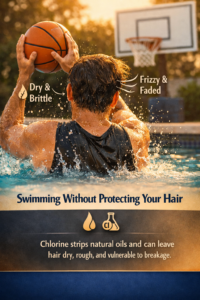
One of the biggest summer threats to men’s hair is chlorine exposure, which can weaken hair. Whether you’re swimming laps for exercise or spending weekends relaxing by the pool, chlorine can significantly affect your hair’s health and appearance. We know nothing beats a refreshing swim on a hot summer day. However, spending time in chlorinated pools can significantly impact hair and skin. Read on to learn the effect it has on your hair’s health and appearance.
How Chlorine Creates Summer Damaged Hair
Chlorine is added to pools to eliminate bacteria and maintain water quality. Pool chlorine is primarily made from chlorine gas, which is produced from ordinary salt through a process called electrolysis. It can also come in various forms, such as sodium hypochlorite (liquid bleach) and calcium hypochlorite, which, when dissolved in water, release hypochlorous acid, the active sanitizing agent. Pool sanitizing agents typically contain chlorine (in forms such as sodium hypochlorite, calcium hypochlorite, or trichlor), bromine, and sometimes a biguanide. These ingredients work to kill bacteria and other microorganisms in the water, ensuring it remains safe for swimming.
Unfortunately, chlorine and other sanitizing agents can strip hair of its natural oils. These oils help maintain moisture levels and protect the hair shaft from environmental damage. Hair and skin’s repeated exposure to chlorine can result in:
- Dryness
- Brittleness
- Increased breakage
- Rough texture
- Dull appearance
- Color fading
- Scalp irritation
In lighter hair colors, chlorine may also contribute to a greenish tint. While chlorine itself doesn’t directly turn hair green, it can interact with trace metals such as copper in pool water, causing discoloration.
Can Chlorine Cause Hair Loss?
Chlorine is not typically considered a direct cause of permanent hair loss. However, excessive exposure may weaken the hair shaft, making hair more susceptible to breakage. Men with thinning hair may notice increased shedding or reduced hair quality when chlorine exposure is combined with other damaging factors.
How to Protect Your Hair from Chlorine
Fortunately, there are several simple ways to minimize chlorine damage:
1. Wet Your Hair Before Swimming
Hair acts much like a sponge. If your hair is already saturated with clean water, it has less capacity to absorb chlorinated pool water.
Before entering the pool:
- Thoroughly rinse your hair with fresh water.
- Ensure your hair is fully saturated.
- Apply a leave-in conditioner if possible.
2. Use a Protective Leave-In Conditioner
A quality leave-in conditioner creates a protective barrier between your hair and chlorinated water. This barrier helps reduce moisture loss and limits chemical penetration.
Look for products containing:
- Argan oil
- Coconut oil
- Shea butter
- Aloe vera
- Panthenol
3. Rinse Immediately After Swimming
The longer chlorine remains on your hair, the greater the potential for damage.
After swimming:
- Rinse thoroughly with fresh water.
- Shampoo using a gentle cleansing formula.
- Follow with a moisturizing conditioner.
4. Consider Clarifying Treatments
Men who swim frequently may benefit from using a shampoo that removes chlorine and copper once every 1 to 2 weeks. This helps remove chlorine buildup while restoring hair’s natural balance.

2. Sun Exposure Creates Summer Damaged Hair
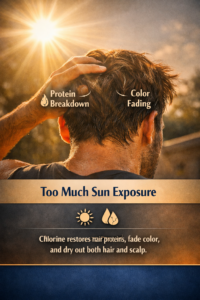
Most people associate UV damage with skin, but sunlight can be surprisingly harmful to hair as well.
Understanding UV Damage
Just as ultraviolet radiation breaks down collagen in the skin, it can also degrade proteins within the hair shaft.
Over time, excessive UV exposure may cause:
- Dryness
- Fading of color-treated hair
- Increased porosity
- Loss of elasticity
- Split ends
- Rough texture
The scalp is also vulnerable to sunburn, particularly for men with thinning hair or closely cropped hairstyles.
Who Is Most at Risk?
Men who spend significant time outdoors are especially vulnerable, including:
- Golfers
- Hikers
- Runners
- Cyclists
- Lifeguards
- Construction workers
- Beachgoers
The longer the exposure, the greater the cumulative damage.
Wear a Hat Whenever Possible
One of the simplest and most effective forms of protection is wearing a hat.
Benefits include:
- Reduced UV exposure
- Scalp protection
- Less moisture loss
- Reduced fading of color-treated hair
Choose breathable materials such as:
- Cotton
- Lightweight performance fabrics
- Straw for casual settings
A well-fitted hat can dramatically reduce summer hair damage while enhancing your overall style.
Avoid Tight or Damaging Headwear
While hats can be beneficial, avoid headwear that excessively pulls on the hair.
Prolonged tension can contribute to:
- Hair breakage
- Traction-related thinning
- Scalp irritation
Choose comfortable, properly fitting hats rather than tight caps that create unnecessary stress on the hairline.
Use Hair Products with UV Protection
Many modern styling products include UV filters specifically designed to shield hair from sun damage.
Look for:
- UV-protective sprays
- Leave-in conditioners with SPF technology
- Lightweight protective creams
- Sun-defense hair mists
These products can be particularly beneficial for men who spend long hours outdoors.
Men with curly, textured, or already dry hair may notice these effects more dramatically.
Deep Conditioning After Beach Days
A weekly deep-conditioning treatment can help restore moisture lost through saltwater exposure.
Deep conditioners help:
- Improve elasticity
- Increase softness
- Reduce breakage
- Restore shine
- Improve manageability
This simple step can significantly improve hair health throughout the summer.
3. Heat and Dehydration Accelerate Summer Damaged Hair
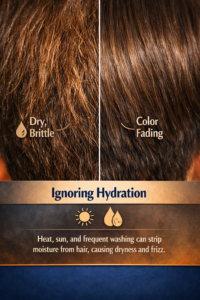
One of the most overlooked causes of summer hair damage is dehydration.
Why Hydration Matters
Healthy hair depends on adequate moisture both internally and externally.
When the body becomes dehydrated:
- Hair may appear dull.
- The scalp can become dry.
- Existing damage becomes more noticeable.
While drinking water won’t instantly transform hair quality, proper hydration supports overall scalp and hair health.
Reduce Heat Styling
Many men rely on blow dryers, flat irons, and other heated styling tools to achieve their preferred look.
During summer, however, hair is already exposed to significant environmental stress. Adding excessive heat can compound the problem.
Frequent heat styling may lead to:
- Moisture loss
- Breakage
- Frizz
- Split ends
- Reduced shine
Air-Dry When Possible
Whenever practical:
- Scrunch or pat hair dry with a towel.
- Allow hair to air-dry naturally.
- Use the lowest heat setting if blow-drying hair is necessary.
Many men find that embracing their natural texture in summer reduces damage and creates a more relaxed seasonal style.
Schedule Professional Conditioning Treatments
Professional deep-conditioning services can be especially beneficial during peak summer months.
A licensed barber or stylist can recommend treatments that:
- Restore moisture
- Improve texture
- Reduce frizz
- Strengthen weakened strands
- Improve overall appearance
For men who spend considerable time outdoors, periodic conditioning treatments can make a noticeable difference.
Another Way Summer Damaged Hair Happens
Saltwater Can Leave Hair Dry and Fragile
Swimming in the ocean may seem more natural than swimming in a chlorinated pool, but saltwater presents its own challenges.
How Saltwater Creates Damaged Hair
Salt naturally draws moisture out of the hair shaft through a process called osmosis.
This can leave hair:
- Dehydrated
- Brittle
- Frizzy
- Tangled
- More prone to breakage
Protecting Hair at the Beach
Before entering the ocean:
- Wet hair with fresh water.
- Apply leave-in conditioner.
- Wear a hat when not swimming.
After swimming in ocean:
- Rinse hair thoroughly.
- Wash with a gentle shampoo if needed.
- Replenish moisture with conditioner.
Additional Summer Hair Care Tips for Men
Beyond avoiding the major sources of damage, consider incorporating these habits into your routine.
Use a Moisturizing Shampoo
Switch to a hydrating shampoo during the summer months.
Avoid formulas containing excessive sulfates that may further dry the hair.
Don’t Overwash
While sweating increases during summer, shampooing multiple times daily can strip beneficial oils.
Most men benefit from washing:
- Daily if very active or oily
- Every other day if hair is normal or dry
The ideal frequency depends on individual scalp conditions.
Eat a Hair-Healthy Diet
Strong hair starts with proper nutrition.
Focus on foods rich in:
- Protein
- Iron
- Zinc
- Vitamin D
- Omega-3 fatty acids
- Biotin
Examples include:
- Eggs
- Fish
- Lean meats
- Greek yogurt
- Nuts
- Leafy greens
- Berries
Protect Your Scalp
Many men focus solely on their hair and neglect the scalp.
A healthy scalp supports healthy hair growth.
If your scalp is exposed:
- Apply scalp-safe sunscreen.
- Wear protective headwear.
- Avoid excessive sunburn.
Repeated scalp damage can negatively affect overall hair health over time.
Final Thoughts on Summer Damaged Hair
Summer offers countless opportunities to enjoy outdoor activities, but it also presents unique challenges for maintaining healthy hair. Chlorine, UV rays, saltwater, heat, and dehydration can all contribute to dryness, breakage, fading, and reduced hair quality if left unchecked. Damaged hair is preventable and repairable.
The good news is that protecting your hair doesn’t require an elaborate grooming routine. Simple habits such as wearing a hat, using leave-in conditioner, rinsing after swimming, limiting heat styling, and maintaining proper hydration can go a long way toward preserving healthy hair throughout the season.
By taking a proactive approach to summer hair care, men can minimize damage, improve hair appearance, and maintain stronger, healthier-looking hair long after the season ends. Whether you’re spending weekends at the beach, afternoons at the pool, or hours hiking in the sun, a few preventative measures today can help keep your hair looking its best all summer long.
You know how important it is to wear sunscreen daily, but just like your skin, you can’t neglect your hair, either. UVA/UVB rays can also damage your luscious locks. Mix that with water, salt, and the heat of the sun’s rays, and it can leave hair dry, brittle, and, if you have color-treated strands, faded. From harsh sun rays beaming down on the pool to a long day at the beach, summer is the most harmful season for your hair.
Use Cover to Prevent Summer Damaged Hair
Offer your hair a little shade from the sun by covering up when applicable. For example, on a sunny day at the beach or on a long hike, wear a hat. Hats are a stylish way to keep the sun out of your eyes and protect your hair from damaging rays. However, stay away from latex caps and swim caps. These will pull on your hair and contribute to thinning and damage.
Prevent Summer Damaged Hair and Use the Right Products
There are numerous options available that help prevent hair damage. Plan ahead for a long day at the pool by using some leave-in conditioner beforehand. Keeping your hair properly moisturized will limit the damage caused by chlorine. Of course, when you are out in the sun, use products that protect against UV rays. You would be surprised how many products are available specifically to prevent sun damage. As you shop around for sunscreen, also keep an eye out for products that will protect your hair.
Hydration Is Key in Preventing Summer Damaged Hair
Make sure you are properly conditioning your hair and even going to a stylist for an occasional deep conditioning. Avoid heat-activated products like straighteners and blow-dryers as much as possible, especially during the summer. Instead, try going for a towel dry and embrace your natural look! This will help you stay hydrated during the summer days of pool parties, beach outings, and hiking adventures.
m For Men | Summer Damaged Hair Care For Men
m FOR MEN is the premier full-service men’s only salon…a male-exclusive masculine grooming environment where men get all of their hair, nail, skin, and body care treatments in Orange County, CA. Our clients can read today’s paper, check out the latest gadget magazine, all while counting on on-time appointments. m FOR MEN’s clients experience current techniques, products designed exclusively for men, all in a space that he does not have to share with his female counterpart. Why choose m FOR MEN? Because we are different, the tools we use, the products we choose, and the in-depth training of our associates.