Hair loss is one of the most common cosmetic and medical concerns among American men. Yet despite how widespread it is, many men still believe hair thinning only affects older adults or that it is caused by poor grooming habits, stress alone, or wearing hats. In reality, male hair loss is a complex issue driven by genetics, hormones, lifestyle, medical conditions, age, ethnicity, and environmental factors. Hair loss treatments work best when men have all the information available.
Today, millions of American men are actively searching for solutions — from prescription medications and supplements to scalp treatments, PRP therapy, and hair transplantation. Understanding the statistics behind male hair loss can help men make informed decisions earlier, when treatments are often most effective.
How Common Is Hair Loss in Men?
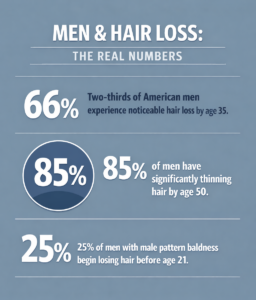
Hair loss is extremely common in the United States. According to the American Hair Loss Association:
- Approximately two-thirds of American men experience some degree of noticeable hair loss by age 35
- Around 85% of men have significantly thinning hair by age 50
- About 25% of men with male pattern baldness begin losing hair before age 21
Male pattern baldness — medically known as androgenetic alopecia (AGA) — accounts for the overwhelming majority of male hair loss cases in the United States. Research consistently shows that androgenetic alopecia affects up to 50% of men overall, with prevalence increasing steadily with age. In practical terms, hair loss is no longer a niche issue. It is a mainstream health, cosmetic, and psychological concern affecting tens of millions of men nationwide.
Hair Loss Causes in Men: By Percentage
Although exact percentages vary slightly between studies, dermatology and trichology research generally agrees on the approximate breakdown of male hair loss causes.
Estimated Breakdown of Male Hair Loss Causes in the U.S.
| Cause of Hair Loss | Estimated Percentage of Cases | Description |
|---|---|---|
| Genetics + DHT sensitivity (Androgenetic Alopecia) | 90–95% | Hereditary male pattern baldness |
| Stress-related shedding (Telogen Effluvium) | 5–10% | Triggered by emotional or physical stress |
| Autoimmune disorders (Alopecia Areata) | 1–2% | Immune system attacks follicles |
| Nutritional deficiencies | 2–5% | Iron, zinc, protein, vitamin D, B12 deficiencies |
| Hormonal or endocrine disorders | 1–3% | Thyroid issues, testosterone imbalance |
| Medication-induced hair loss | 1–3% | Antidepressants, chemotherapy, blood pressure meds |
| Scalp infections or inflammatory conditions | <1–2% | Fungal infections, psoriasis, dermatitis |
| Traction or mechanical damage | <1% | Tight hairstyles, extensions, chronic tension |
These numbers reflect population estimates gathered from dermatology literature and hair-loss research organizations.
Genetics: The Dominant Cause of Male Hair Loss
The overwhelming majority of male hair loss is caused by androgenetic alopecia.
This condition is genetically driven and linked to the body’s sensitivity to dihydrotestosterone (DHT), a hormone derived from testosterone.
Men with androgenetic alopecia inherit hair follicles that are genetically more sensitive to DHT. Over time, DHT progressively shrinks follicles in a process called miniaturization. Hair becomes thinner, shorter, and weaker until growth eventually stops.
Research shows:
- Men with a family history of baldness are significantly more likely to experience hair loss
- Sons may have a 5–6 times greater risk if their fathers experienced balding
- Hair loss risk can come from both the maternal and paternal sides of the family
Contrary to popular myths:
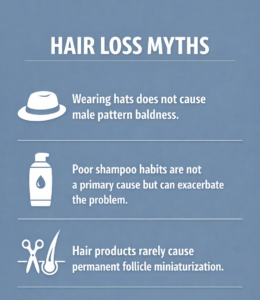
- Wearing hats does not cause male pattern baldness
- Poor shampoo habits are not a primary cause, but can exacerbate the problem
- Hair products rarely cause permanent follicle miniaturization
The root issue is usually genetic hormone sensitivity.
Stress and Hair Loss: How Much Does Stress Matter?
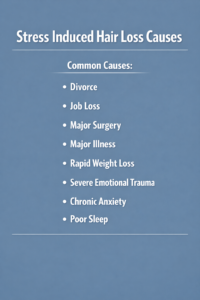
Stress-related hair loss is real and often misunderstood. Stress usually causes a condition called telogen effluvium, where a larger-than-normal number of hairs prematurely shift into the shedding phase. Unlike genetic baldness, stress-related hair loss is often temporary. Common triggers include:
- Divorce
- Job loss
- Surgery
- Major illness
- Rapid weight loss
- Severe emotional trauma
- Chronic anxiety
- Poor sleep
The National Institutes of Health has published research showing that chronic stress hormones can directly impair hair follicle stem cells involved in growth. Experts estimate stress-related shedding contributes to approximately:
- 5–10% of male hair loss cases
- A much larger percentage of temporary shedding episodes
Importantly, stress can also accelerate the progression of existing genetic hair loss. Many men genetically predisposed to balding first notice rapid thinning during periods of high stress.
Hormones and Hair Loss
Hormones play a significant role in male hair loss, particularly through the influence of androgens such as testosterone and dihydrotestosterone (DHT). DHT is a powerful hormone created when the enzyme 5-alpha reductase converts testosterone into a more potent androgen. In genetically susceptible men, DHT binds to receptors in the scalp’s hair follicles. Especially those follicles around the temples, hairline, and crown. Gradually shrinking the follicles over time in a process known as miniaturization. As follicles become smaller, the hair growth cycle shortens, resulting in thinner, weaker, and shorter strands until the follicles may eventually stop producing visible hair altogether.
While DHT is the primary hormonal driver behind androgenetic alopecia, other hormonal imbalances can also contribute to shedding and thinning. Thyroid disorders, elevated cortisol from chronic stress, insulin resistance, metabolic syndrome, anabolic steroid use, and fluctuations in testosterone levels can all disrupt the normal hair growth cycle. Emerging research also suggests that men experiencing early-onset hair loss may have a higher likelihood of underlying metabolic or cardiovascular risk factors, including obesity, high blood pressure, and insulin dysregulation. Because hormones affect not only hair growth but also inflammation, oil production, scalp health, and follicle longevity, modern hair restoration increasingly focuses on hormonal management as part of a comprehensive treatment strategy. This is why many of today’s most effective medical hair loss treatments — including finasteride and dutasteride — are designed specifically to reduce DHT activity and slow the hormonal progression of male pattern baldness.
The Role of DHT
DHT binds to genetically sensitive follicles and gradually shrinks them. Men with higher follicle sensitivity to DHT tend to:
- Thin earlier
- Lose hair faster
- Develop more severe baldness patterns
This is why medications like:
- Finasteride
- Dutasteride
Finasteride and Dutasteride focus on reducing DHT production.
Hormonal hair loss may also involve:
- Thyroid disorders
- Insulin resistance
- Metabolic syndrome
- Steroid or testosterone abuse
- Endocrine disorders
Hair Loss by Age
Hair loss in men is strongly correlated with age, with both the likelihood and severity of thinning increasing steadily over time. While many men assume baldness occurs only later in life, research shows hair loss often begins much earlier than expected. Approximately 25% of men with male pattern baldness begin noticing recession or thinning before the age of 21, and by age 35, nearly two-thirds of American men experience some degree of visible hair loss. As men move into their forties and fifties, the prevalence rises dramatically, with studies estimating that roughly 85% of men will have significant hair thinning by age 50. Aging affects the hair growth cycle in multiple ways:
- Follicles spend less time in the active growth phase,
- Scalp circulation can decline,
- Collagen production decreases, and
- Years of cumulative DHT exposure gradually weaken genetically susceptible follicles.
In addition to hormonal factors, aging also increases the likelihood of health conditions that can worsen hair loss, including thyroid dysfunction, cardiovascular disease, chronic inflammation, nutritional deficiencies, and metabolic disorders. Environmental wear-and-tear over decades. Including UV exposure, smoking, stress, poor diet, and pollution. These environmental factors may further accelerate follicle aging.
Older men also tend to experience slower regrowth and reduced hair density compared to younger individuals, as follicular regenerative capacity diminishes over time. However, age alone does not determine whether a man will lose his hair; genetics remains the dominant factor. Some men retain thick hair well into old age, while others begin aggressive thinning in their late teens or twenties. What the statistics consistently show is that hair loss is a progressive condition for most men, making early prevention and treatment increasingly important before follicles become permanently dormant.
Male Hair Loss Statistics by Age
| Age Range | Estimated Percentage Experiencing Noticeable Hair Loss |
|---|---|
| 18–21 | 15–25% |
| 25–35 | 40–66% |
| 35–50 | 60–85% |
| 50+ | 85%+ |
Research also shows:
- Around 25% of men with male pattern baldness begin before age 21
- By age 50, over half of men experience moderate-to-significant hair loss
A population study found:
- 47.5% prevalence in men ages 30–35
- 58.7% prevalence in men ages 36–40
- 73.2% prevalence in men ages 41–45
Hair Loss by Race and Ethnicity
Hair loss affects men of every race and ethnicity, but research shows that prevalence, age of onset, progression patterns, hair density, and even the types of hair loss commonly experienced can vary significantly among different populations. Caucasian men statistically show the highest overall rates of androgenetic alopecia, often experiencing earlier onset and more aggressive progression of male pattern baldness compared to other ethnic groups. Studies have consistently found that Caucasian men are more likely to develop advanced Norwood scale patterns at younger ages, likely due to a combination of genetic inheritance and androgen sensitivity.
Asian men generally experience lower overall rates of severe baldness and often develop thinning later in life, though prevalence still increases substantially with age. Hair follicle structure, scalp density, and differences in DHT receptor activity may contribute to these trends. Black men can certainly experience androgenetic alopecia, but they are also disproportionately affected by other forms of hair loss, including traction alopecia and inflammatory scalp conditions such as central centrifugal cicatricial alopecia (CCCA). Certain grooming practices, chronic scalp tension, chemical treatments, and inflammation may increase the risk of these conditions.
Hispanic and Latino men tend to fall somewhere between Caucasian and Asian populations in overall prevalence rates, though genetics, ancestry, and lifestyle factors create significant variation within these groups. Researchers also note that hair texture and follicle shape differ across ethnicities, influencing not only how hair loss appears visually but also how quickly thinning becomes noticeable. For example, men with naturally coarse or curly hair may maintain a fuller, denser appearance longer despite active follicle miniaturization. Understanding racial and ethnic differences in hair loss is important because it underscores the need for individualized hair loss treatment approaches, scalp-care recommendations, and culturally informed grooming practices, rather than assuming that all men experience hair loss the same way.
Caucasian Men
Caucasian men generally experience the highest rates of androgenetic alopecia.
Studies suggest:
- Earlier onset
- Higher overall prevalence
- More severe Norwood progression
Black Men
Black men can experience androgenetic alopecia but are also at increased risk for:
- Central centrifugal cicatricial alopecia (CCCA)
- Traction alopecia
- Inflammatory scalp disorders
Hair grooming practices and chronic scalp tension may contribute to certain non-genetic forms of hair loss.
Asian Men
Asian men statistically tend to:
- Develop male pattern baldness later
- Show slower progression
- Maintain a lower overall prevalence compared to Caucasian populations
However, prevalence rises significantly with age.
Hispanic and Latino Men
Research suggests Hispanic men generally fall between the Caucasian and Asian populations in overall prevalence rates.
Genetics, diet, hormonal health, and environmental factors all contribute.
While exact U.S. racial statistics vary by study design, dermatology research consistently shows ethnicity influences:
- Hair density
- Follicle shape
- Balding progression
- Age of onset
- Response to treatment
Hair Loss by Region in the United States
While genetics remains the primary driver of male hair loss, researchers and dermatologists are increasingly studying how geographic and environmental factors across the United States may influence the severity, progression, and visibility of hair thinning. Although there is no definitive nationwide map ranking hair loss prevalence by state, several regional patterns appear consistently in studies and consumer health trends. Men living in densely populated metropolitan areas such as New York City, Los Angeles, Chicago, and other high-pressure urban centers may experience higher levels of stress-related shedding due to demanding work schedules, chronic stress, sleep deprivation, and elevated cortisol levels, all of which can negatively affect the hair growth cycle.
In sun-intensive states such as California, Arizona, Texas, Nevada, and Florida, prolonged ultraviolet (UV) exposure may contribute to scalp inflammation, oxidative stress, collagen degradation, and accelerated aging of the scalp and hair follicles, particularly for men who spend significant time outdoors without scalp protection. Industrial and high-pollution regions may also expose individuals to airborne toxins and particulate matter that emerging research suggests could increase oxidative stress around hair follicles and worsen inflammatory scalp conditions. Climate can further influence scalp health, as extremely dry regions may increase scalp irritation and flaking, while highly humid environments can exacerbate seborrheic dermatitis and fungal overgrowth in susceptible individuals.
Regional lifestyle differences — including diet quality, smoking rates, alcohol consumption, water quality, and access to healthcare or dermatological treatment — may also indirectly affect hair health outcomes. Additionally, trends in grooming culture vary geographically, with some areas showing higher rates of preventive treatments, hair transplant procedures, scalp therapies, and prescription interventions among men. While living in a specific state does not directly determine whether a man will go bald, regional environmental stressors and lifestyle patterns can influence how aggressively underlying genetic hair loss progresses and how healthy the scalp environment remains over time.
Areas With Higher Reported Hair Loss Concerns
High-Stress Urban Areas
Cities with high stress, long work hours, and poor sleep culture may see increased stress-related shedding:
- New York City
- Los Angeles
- Chicago
High UV Exposure Areas
States with intense sun exposure may contribute to:
- Scalp inflammation
- Oxidative stress
- Accelerated scalp aging
Examples include:
- California
- Arizona
- Florida
Pollution-Heavy Metropolitan Areas
Emerging research suggests air pollution may contribute to:
- Oxidative follicle stress
- Scalp inflammation
- Accelerated miniaturization
Medical Conditions Linked to Hair Loss
Hair loss in men is not always an isolated cosmetic issue, and in many cases, it can be an early outward sign of underlying medical conditions that affect the body’s overall metabolic, immune, or hormonal balance. Thyroid disorders, particularly hypothyroidism and hyperthyroidism, are well-established contributors to diffuse thinning because thyroid hormones play a central role in regulating the hair growth cycle; when these levels are imbalanced, follicles can prematurely shift into the shedding phase, leading to noticeable hair density loss across the scalp. Iron deficiency anemia is another common medical driver, especially when low ferritin levels reduce the oxygen supply needed for healthy follicle function, leading to chronic shedding and slower regrowth.
Autoimmune conditions such as lupus and alopecia areata can also directly target hair follicles, with the immune system mistakenly attacking follicular structures, leading to patchy or widespread hair loss depending on severity. Metabolic conditions, including diabetes and insulin resistance, have been increasingly associated with poorer scalp circulation, heightened inflammation, and impaired follicle regeneration, all of which can contribute to progressive thinning over time. Additionally, chronic scalp inflammatory diseases and infections, such as severe seborrheic dermatitis or fungal infections, can disrupt the follicular environment and weaken hair anchoring.
Certain prescription medications, including some antidepressants, blood pressure drugs, retinoids, and chemotherapy agents, are also known to trigger telogen effluvium, a temporary but often dramatic shedding response caused by physiological stress on the body. Even systemic conditions such as high cholesterol, cardiovascular disease, and hormonal imbalances involving testosterone or cortisol have been linked in research to accelerated hair thinning in men. Because of these wide-ranging associations, dermatologists often view sudden or unusually aggressive hair loss as a potential diagnostic clue, prompting further evaluation of blood markers, hormone levels, and overall health status to identify and address any underlying medical contributors before focusing solely on cosmetic treatment.
Several medical conditions are associated with increased hair thinning, including:
- Thyroid disease
- Diabetes
- Lupus
- Autoimmune disorders
- Iron deficiency anemia
- Severe infections
- Metabolic syndrome
Research also suggests that androgenetic alopecia may correlate with:
- Hypertension
- Cardiovascular disease
- Insulin resistance
- Elevated cholesterol levels
For some men, hair loss can be an early warning sign of broader health issues.
The Psychological Impact of Hair Loss
The psychological impact of hair loss in men is often more significant than many realize, affecting self-image, confidence, and overall quality of life in ways that extend far beyond appearance. Multiple studies in dermatology and behavioral health have shown that men who experience visible thinning or balding patterns may report increased levels of anxiety, reduced self-esteem, and heightened self-consciousness in social, professional, and romantic settings. Because hair is closely tied to cultural perceptions of youth, vitality, and attractiveness, its gradual loss can create a sense of aging or identity shift that some men find difficult to adjust to, particularly when it begins at a younger age.
Research also suggests that men with early-onset androgenetic alopecia are more likely to experience body image dissatisfaction and may avoid situations such as dating, photography, or public speaking due to concerns about appearance. In some cases, hair loss can contribute to symptoms of depression or chronic stress, which may further worsen shedding through physiological stress pathways involving cortisol and inflammation, creating a cyclical effect.
Social media and modern grooming culture have heightened awareness of appearance standards, often leading men to compare themselves to peers, celebrities, or heavily styled, treated images that do not reflect typical hair density patterns. At the same time, studies show that effective treatment or visible improvement in hair density can significantly improve psychological well-being, confidence, and perceived social attractiveness. This has helped drive the growth of the hair restoration industry, not only as a cosmetic market but also as part of broader mental and emotional wellness care.
Studies and surveys consistently show hair loss can negatively affect:
- Confidence
- Dating
- Career perception
- Anxiety levels
- Depression risk
- Body image
The hair restoration industry has grown into a multibillion-dollar market partly because emotional distress around hair loss is so common. Social media, dating apps, and appearance-focused culture have intensified pressure on younger men, leading many to seek treatment earlier than previous generations.
Most Common Hair Loss Treatments Men Use
Modern hair loss treatments have evolved dramatically. The most common treatments American men use for hair loss today fall into a mix of FDA-approved medical therapies, over-the-counter topical solutions, and increasingly, advanced clinical and procedural interventions. At the foundation are two widely recognized FDA-approved treatments:
- Minoxidil – a topical vasodilator that helps prolong the growth phase of the hair cycle and improve follicle activity, and
- Finasteride – an oral 5-alpha reductase inhibitor that reduces the conversion of testosterone into dihydrotestosterone (DHT), the primary hormone responsible for follicle miniaturization in androgenetic alopecia.
These two treatments remain the most commonly recommended first-line options among dermatologists, supported by extensive clinical research and long-term efficacy data. In more recent years, there has been a significant rise in the use of compounded or prescription alternatives such as dutasteride, which offers stronger DHT suppression in some cases, as well as adjunct therapies like low-level laser therapy (LLLT), platelet-rich plasma (PRP) injections, and microneedling, all of which aim to stimulate circulation, reduce inflammation, and support follicular regeneration.
Nutritional and supplement-based approaches have also gained popularity, with products containing ingredients like saw palmetto, pumpkin seed oil, marine peptides, zinc, biotin, and vitamin D commonly used to support scalp health and address potential deficiencies that may worsen shedding. On the surgical side, hair transplantation remains a highly effective and increasingly refined option, with modern follicular unit extraction (FUE) techniques providing natural-looking results with minimal scarring and downtime. More experimental and regenerative therapies, such as exosome treatments and stem-cell–based approaches, are also emerging in specialty clinics. Although these remain less standardized hair loss treatments.
Overall, hair loss treatment trends in the United States show a shift toward combination therapy—where men use multiple approaches simultaneously rather than relying on a single solution—reflecting a more medically informed and proactive approach to managing hair loss at earlier stages.
FDA-Approved Hair Loss Treatments
The two primary FDA-approved hair loss treatments for male pattern baldness are:
- Minoxidil
- Finasteride
Research also shows increasing use of:
- Dutasteride
- PRP therapy
- Low-level laser therapy
- Hair transplantation
- Peptide and exosome therapies
- Nutritional correction
- Scalp health optimization
Key Takeaways for Hair Loss Treatments
The statistics surrounding male hair loss reveal several important truths:
- Hair loss is extremely common and affects most men eventually
- Genetics and DHT account for roughly 90–95% of cases
- Stress, medical conditions, hormones, nutrition, and environment can accelerate or worsen thinning
- Hair loss often begins much earlier than men expect
- Different races and ethnicities experience different patterns and progression rates
- Early intervention dramatically improves treatment success
Perhaps most importantly, hair loss should not automatically be viewed as “just cosmetic.” In some cases, it may reflect deeper hormonal, nutritional, inflammatory, or metabolic issues that deserve professional evaluation. For today’s men, understanding the numbers behind hair loss is no longer about vanity alone. It is about health, prevention, confidence, and making evidence-based decisions before hair loss becomes advanced. Prevention can happen earlier now with the numerous hair loss treatments avalable to men.