In today’s digital landscape, it’s common for male clients to come across conflicting advice on the internet. Especially when it comes to men’s grooming hacks. Even about hair coloring services. One recurring men’s hair question is whether men who color their gray hair regularly (typically every 3–5 weeks) should periodically buzz their hair off to give their scalp, hair, or even body a “break” from chemical services.
Let’s unpack whether men need to buzz their heads to take a hair coloring break from a professional, science-based perspective.
Understanding What Hair Coloring Actually Affects
Hair color is considered either permanent or demi-permanent. It primarily affects the hair shaft. Hair color does NOT affect the living structures beneath the skin. The hair you see above the scalp is biologically non-living keratin. This means:
- Hair color does not “fatigue” the hair follicle
- It does not enter the bloodstream in any meaningful way
- It does not require systemic “detox” or recovery time
The only living structure involved is the scalp. The scalp skin can be affected ONLY IF there is sensitivity, improper formulation, or poor application technique.
The Myth of “Letting Your Hair Breathe”
A common phrase clients repeat is that hair needs to “breathe.” In reality:
- Hair does not have lungs or metabolic function
- Oxygen and nutrients are delivered via the bloodstream to the follicle, not through the hair shaft
- Buzzing your hair does nothing to improve oxygen flow or follicle health
This myth likely stems from misunderstandings about scalp care, not hair care.
Understanding the Myth of “Letting Your Hair Breathe”
The concept that hair needs to “breathe” is a common misconception. Hair is made of keratin, a non-living protein, which means it does not require oxygen like living tissues do. Therefore, the idea that hair needs to be free from products or styles to “breathe” is unfounded.
What Promotes Healthy Hair?
While hair itself does not breathe, there are practices that can help maintain its health:
- Avoid Tight Hairstyles: Styles that pull on the hair can cause tension on the follicles, leading to breakage or hair loss over time.
- Limit Heat Styling: Frequent use of heat tools can damage hair. Giving your hair breaks from heat styling can help maintain its integrity.
- Scalp Care: Healthy hair starts at the scalp. Regular cleansing and conditioning can keep the scalp healthy, which in turn supports hair growth.
Key Takeaways on Hair Coloring
| Aspect | Myth/Fact |
|---|---|
| Hair “Breathing” | Myth – Hair does not breathe |
| Tight Hairstyles | Can cause damage |
| Heat Styling | Should be limited for health |
| Scalp Health | Essential for hair growth |
In summary, while hair does not need to “breathe”, taking care of your scalp and avoiding damaging styles can lead to healthier hair overall.
When a Hair Coloring Break MIGHT Make Sense
The idea of buzzing the hair for a “reset” is often very unnecessary. However, there are specific scenarios where a break from color services could be beneficial:
1. Scalp Sensitivity or Irritation
If a client experiences:
- Redness
- Itching
- Burning during or after color
A pause in services may help, but the solution is usually:
- Adjusting the formula
- Switching to a gentler color line
- Improving application technique
There is absolutely no need to shave the head entirely.
2. Compromised Hair Condition
Frequent hair coloring on already weakened hair (especially if lightened) can lead to:
- Dryness
- Breakage
- Loss of elasticity
However, for most men, coloring gray hair (deposit-only color) causes minimal damage. A buzz cut would remove compromised ends, but it’s not required for healthy regrowth. Additionally, men get haircuts twice, if not three times, more often than their female counterparts. This means men have their “ends” cut before every coloring service. Most often, men do not experience compromised ends. Unless they have hair longer than average.
3. Lifestyle or Aesthetic Reset
Some men simply want:
- A fresh start
- Lower maintenance
- A return to natural gray
In this case, buzzing can be a style choice rather than a medical or biological necessity.
What Actually Keeps Hair and Scalp Healthy
There are many things men can do daily that will keep their hair and scalp healthy. Rather than taking drastic measures like buzzing your hair off, a more professional and sustainable approach to healthy hair and scalp skin includes:
✔ Consistent Professional Hair Coloring Application
A trained stylist ensures:
- Proper formulation for gray coverage
- Minimal overlap on previously colored hair
- Scalp protection during application
✔ High-Quality Hair Coloring Products
Not all hair color is created equal. Professional-grade color systems are designed with:
- Conditioning agents
- Controlled ammonia or alternative alkalizers
- Predictable, safe results
✔ Proper Home Care
Encourage clients to use:
- Sulfate-conscious shampoos
- Hydrating conditioners
- Occasional scalp treatments
Healthy scalp = healthy hair growth.
✔ Realistic Maintenance Schedules
Coloring every 3–5 weeks is standard for gray coverage. Stretching beyond that may lead to uneven results—not improved health.
The Psychological Component
Internet Advice vs. Professional Guidance
Clients often encounter generalized advice online that lacks context. Statements like:
“You need to detox from hair color”
“Chemicals build up in your body”
“Your scalp needs a reset”
These types of comments are typically not supported by cosmetic science when services are performed correctly.
This highlights an important distinction:
- Generalized information is designed for mass consumption
- Professional guidance is tailored to the individual’s hair type, scalp condition, and goals
Answer: Should You Buzz Your Hair for a Hair Coloring “Break”?
In most cases, no, there is no scientific or professional reason to buzz your hair simply to take a break from monthly gray coverage. Buzzing your hair can be a practical choice for those looking to take a break from dyeing, as it creates a low-maintenance style that eliminates the need for frequent touch-ups. However, it lacks scientific evidence to support its claims of improving hair health or reversing graying.
Buzzing your hair:
- Does not detoxify your body
- Does not improve follicle function
- Does not enhance scalp health on its own
However, it CAN be a valid choice if driven by:
- Personal style preference
- Desire to transition to natural gray
- Simplifying your grooming routine
Understanding the Buzz Cut and Gray Hair
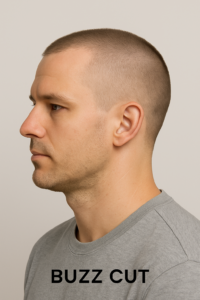
The Buzz Cut Explained
A buzz cut is a very short hairstyle where the hair is clipped to a uniform length all over the head. It is popular for its low-maintenance nature and is often chosen by individuals looking for a fresh start or to manage thinning hair. While it can create a clean, sharp look, it lacks scientific evidence to improve hair health or reverse graying.
Reasons for Buzzing Hair
Many people consider buzzing their hair for various reasons, including:
- Low Maintenance: A buzz cut significantly reduces the time and effort spent on hair care, eliminating the need for frequent styling or dyeing.
- Uniform Appearance: For those with thinning or patchy hair, a buzz cut can create a consistent look, minimizing contrast between hair densities.
- Psychological Empowerment: Making a deliberate choice to buzz can help individuals regain a sense of control over their appearance, especially when dealing with hair loss.
Myths About Hair Coloring and Scalp Health
Despite the appeal of a buzz cut, it is important to note that:
- No Impact on Hair Health: Buzzing your hair does not improve its health or texture. Hair growth and health are determined by factors such as genetics and scalp condition, not by hair length.
- No Reversal of Graying: There is no scientific evidence that cutting hair can reverse the graying process. Graying is a natural part of aging and is influenced by genetics.
Hair Coloring Buzz Cut Reset Conclusion
While buzzing your hair can be a practical choice for those looking to simplify their hair care routine, it does not offer any benefits for hair health or reversing gray hair. The decision should be based on personal style preferences rather than misconceptions about hair growth and health.
Professional Takeaway on Hair Coloring Breaks

For men maintaining gray coverage, the focus should not be on “escaping” color services, but on elevating how those services are performed and maintained. A skilled hairstylist, quality products, and proper home care will always outperform drastic resets driven by internet myths. If a client is coloring gray hair consistently, the real differentiator isn’t whether they occasionally buzz their hair; it’s who is performing the service and how well they understand the science behind it.
A skilled stylist isn’t just applying color. They’re making informed decisions rooted in cosmetology science, chemistry, and scalp physiology. All of which directly impact results, comfort, and long-term hair health.
What a Skilled Stylist Actually Knows (That the Internet Often Misses)
Hair Structure & Chemical Behavior
Professionally trained stylists understand the anatomy of hair at a functional level:
- Cuticle – the outer protective layer that controls porosity
- Cortex – where pigment (natural and artificial) lives
- Melanin changes – why gray hair behaves differently (coarser, more resistant, or sometimes more porous)
They know how oxidative color works:
- How ammonia or alkalizing agents open the cuticle
- How developer (hydrogen peroxide) interact with the pigment
- How to control deposit vs. lift depending on the goal
This is why a professional avoids overprocessing and unnecessary damage—something DIY or generalized advice rarely accounts for.
Scalp Physiology & Safety
A skilled stylist understands the scalp as living tissue:
- Recognizing signs of irritation vs. allergic reaction
- Knowing when not to perform a service
- Adjusting formulations for sensitive clients
- Proper application techniques to minimize scalp exposure
They are also trained in sanitation and infection control standards regulated by boards like the California Board of Barbering and Cosmetology, ensuring client safety with every service.
Gray Hair Is Not “One Size Fits All”
Gray hair coverage is one of the most misunderstood areas online.
A professional knows:
- Gray hair can be resistant, wiry, or unevenly distributed
- Different percentages of gray require different formulas
- Timing, saturation, and product choice all affect coverage
This is why box dye or generic advice often leads to:
- Poor coverage
- Uneven tone
- Faster fading
Product Chemistry & Ingredient Knowledge
Licensed professionals are trained to understand what’s actually inside the products:
- Difference between permanent, demi-permanent, and semi-permanent color
- Role of pH levels in hair and scalp health
- Conditioning agents and how they protect the hair fiber
- When to use low-ammonia or alternative systems
They don’t just follow instructions on a box. They customize chemistry to the client’s hair type and texture.
Controlled Application = Minimal Damage
A major difference between professional services and at-home or misinformed practices is precision.
A skilled stylist:
- Applies color only where needed (typically new growth)
- Avoids overlapping onto previously colored hair
- Uses sectioning and timing strategies to ensure consistency
This alone significantly reduces unnecessary stress on the hair.
Education Professional Stylists Receive
What education do professional stylists get that makes them experts in hair coloring? To become licensed, stylists complete sixteen hundred to twenty-two hundred hours of formal training through a state-approved cosmetology or barbering program.
In California, for example:
- Students must complete extensive coursework before licensure, with no less than sixteen hundred hours
- Pass both the written and practical state board exams
- Maintain compliance with ongoing regulations
These programs include:
- Hair chemistry and chemical services, including chemistry 101
- Anatomy and physiology, including skeletal, muscular, and circulatory systems
- Infection control and safety
- Product knowledge and formulation
- Client consultation and analysis
All of this is governed and standardized by organizations like the California Board of Barbering and Cosmetology.
Beyond Licensing: Continued Education & Specialization
The best professionals don’t stop at licensing. Many pursue:
- Advanced color certifications
- Brand-specific education (Wella, Redken, etc.)
- Trichology studies (hair and scalp science)
- Ongoing workshops on new formulations and techniques
This continued education is what separates an average service provider from a true specialist.
Why This Matters for Clients
When a client considers buzzing their hair to “recover” from color, it often signals a lack of trust in the process or confusion from misinformation. A properly trained stylist ensures:
- Your scalp is protected
- Your hair is not being overprocessed
- Your color is applied strategically and safely
If those boxes are checked, there is no biological need to “reset” your hair by shaving it off.
Professional Hair Coloring Bottom Line
Hair color isn’t something your body needs to recover from—it’s something that needs to be executed correctly. And that comes down to one thing:
The knowledge, training, and precision of the professional behind the chair.
Daniel Rivera