How often should I wash my hair? In the fast-paced world of modern manhood, where early-morning workouts, long commutes, high-stakes meetings, and evening wind-downs, personal grooming often takes a back seat. For many men, “one more day” without washing their hair seems harmless. After all, the scalp feels fine, the hair still styles okay, and who has time for an extra 10 minutes in the shower? Yet beneath that seemingly normal surface lies a hidden process that can transform a healthy scalp into a breeding ground for irritation, inflammation, and even long-term hair loss.
At m FOR MEN Salon and Spa, we see it every week. Clients who arrive with greasy, flaky scalps and thinning hair. They are surprised to learn that infrequent washing is quietly undermining their grooming efforts. This isn’t meant to be alarmist. It is science. The scalp is living skin that houses hair follicles, oil glands, and a delicate microbiome. When left unwashed, it becomes a perfect storm of sebum buildup, dead skin cells, sweat, dirt, and microbial overgrowth. Over days, weeks, months, and years, the consequences compound. What starts as mild itchiness can evolve into chronic dandruff, folliculitis, seborrheic dermatitis, and accelerated androgenetic alopecia (male pattern baldness).
Answer to How Often Should I Wash My Hair
“ How often should I wash my hair?” is a great question for men. The good news!? There is no one-size-fits-all answer. Understanding the negative effects of not washing the hair empowers men to take control. Professional grooming services can reset the damage before it becomes permanent. In our comprehensive blog post, we will walk through exactly what happens to a man’s scalp when washing is neglected. We will explore the biology, timeline of effects, myths versus facts, and proven strategies to maintain scalp health. Whether you are a gym enthusiast, office professional, or simply someone who values looking and feeling your best, this blog post will equip you with the knowledge to protect your crown.
The Scalp: Hair’s Foundation and a Living Ecosystem
To understand the damage of skipping washes, we must first appreciate the scalp’s unique biology. Unlike the skin on the face or arms, the scalp is densely packed with hair follicles. Approximately 100,000–150,000 in most men. The scalp also contains sebaceous glands that produce sebum. Sebum is an oily substance that moisturizes hair and skin while providing a protective barrier against bacteria and environmental pollutants. Sebum production is influenced heavily by androgens, particularly testosterone and its derivative dihydrotestosterone (DHT). Men naturally produce more of these hormones than women, which explains why many guys experience oilier scalps. Especially during their 20s and 30s.
Sweat Glands and The Scalp
Sweat glands add another layer. Physical activity, stress, or warm climates increase perspiration, which mixes with sebum, creating an ideal environment for microbes. The scalp’s microbiome is a community of bacteria, fungi, and yeasts. It plays a critical role in a balancing act. Beneficial organisms, such as Cutibacterium Acnes, help regulate oil production and support skin barrier function. However, the yeast Malassezia (formerly Pityrosporum) thrives on sebum. In small amounts, it’s harmless. When unchecked, it breaks down oils into irritating byproducts, triggering inflammation.
Dead Skin Cells and the Scalp
Dead skin cells (keratinocytes) shed naturally every 28–30 days. However, without regular cleansing, these dead skin cells accumulate alongside environmental debris, styling products, and pollutants. The result? A thick, occlusive layer that suffocates follicles, disrupts pH balance (normally slightly acidic at 4.5–5.5), and invites imbalance. Think of the scalp like a well-maintained garden. Regular watering (analogous to washing) keeps soil healthy and plants thriving. Neglect it, and weeds (Malassezia), compacted earth (buildup), and pests (bacteria) take over. For men, whose scalps often produce 20–30% more sebum than women’s due to hormonal factors, this neglect hits harder and faster.
How Often Should I Wash My Hair?
How often a man washes his hair is a personal choice that should be tailored to his hair type, scalp condition, and lifestyle. Some men may benefit from washing their hair daily for scalp hygiene and personal preference. Others may find that reducing the frequency of washing helps maintain a healthy natural oil balance and improves the condition and manageability of their hair. Ultimately, striking a balance between hair care practices and individual needs is crucial to ensure optimal hair health and overall well-being. For those men who believe in the “no wash trend”, let’s take a good look at what happens to the scalp skin.
No Wash Days 1–7
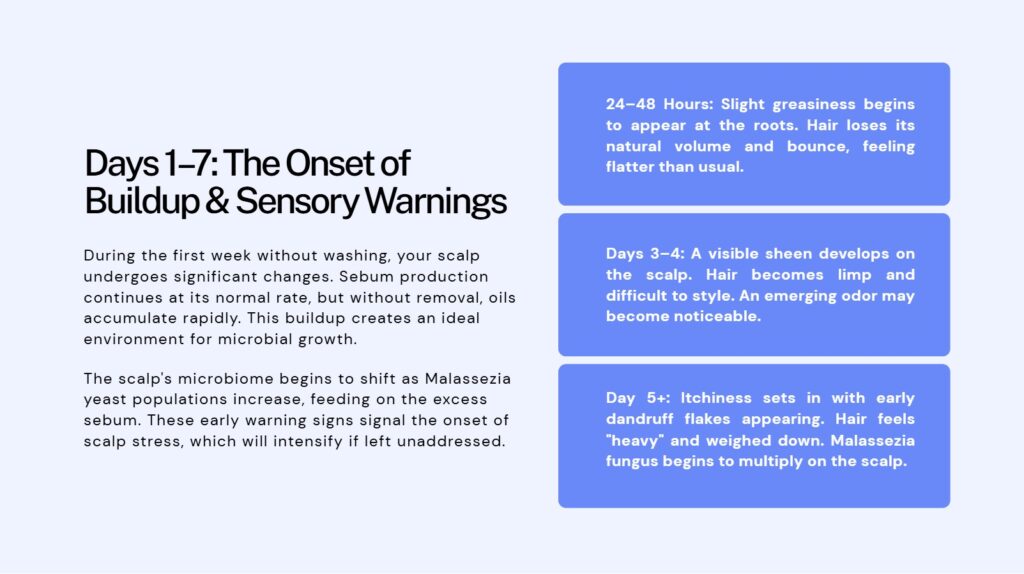
The first few days without washing the hair mark the onset of buildup, and sensory warning signs begin. Skip washing for 24–48 hours, and most men notice little beyond a slight greasiness at the roots. By day three or four, sebum begins to oxidize and mix with sweat and dead cells. This process creates a visible sheen. Hair loses volume and appears limp. Odor emerges. Not from the hair itself, but from bacteria and fungi metabolizing the oils into volatile compounds that smell like sour milk or sweaty socks. Itchiness sets in around day five. Scalp buildup irritates nerve endings, prompting scratching that can introduce micro-tears and further inflammation. Dandruff flakes may appear as small, white or yellowish scales. This process is an early sign of Malassezia overgrowth, which feeds on excess lipids.
Effects of How Often Should I Wash My Hair
At our salon, clients often describe this phase as “my hair just feels heavy.” Objectively, the scalp’s barrier function weakens. Trans-epidermal water loss increases, leading to dryness at the surface despite underlying oiliness. A paradox that confuses many men into washing even less. Microbiome shifts begin subtly here. Studies of low-wash scenarios (such as Antarctic expeditions or space missions) show that Malassezia populations can explode by orders of magnitude within a week, while beneficial bacteria decline (pmc.ncbi.nlm.nih.gov). For active men, think weightlifters or runners, this timeline accelerates. Sweat provides extra nutrients for microbes, turning a three-day skip into a full-blown, greasy, itchy crisis.
Weeks 2–4: Inflammation Takes Hold and Visible Problems Emerge
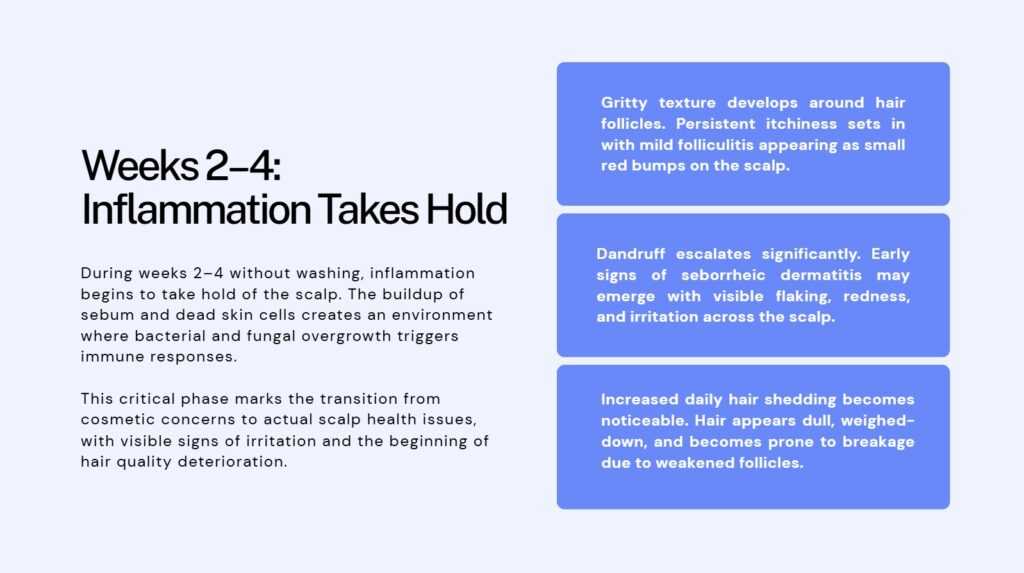
By the second week, scalp buildup becomes palpable. A “gritty” texture forms around follicle openings as oxidized sebum and keratin debris harden. Itchiness escalates to persistent discomfort. Often worse at night or after exercise. Many men develop mild folliculitis, which is red, pimple-like bumps where follicles are clogged and inflamed. Dandruff progresses from occasional flakes to noticeable shedding on shoulders or pillowcases. Seborrheic dermatitis may flare, causing greasy, yellowish scales, redness, and burning. This isn’t just cosmetic. Chronic low-grade inflammation damages the hair growth cycle. Follicles enter a premature telogen (resting) phase, increasing daily shedding from the normal 50–100 hairs to 200 plus.
Weeks 3-4 of How Often Should I Wash My Hair
In weeks three and four, odor intensifies. Microbial byproducts create a noticeable “dirty hair” smell that dry shampoo or cologne can only mask temporarily. Hair appears dull, weighed down, and prone to breakage because the cuticle (outer layer) is coated in residue. Preventing light reflection and moisture distribution. For men with early androgenetic alopecia (already sensitive to DHT), these weeks compound the problem. Poor hygiene amplifies perifollicular inflammation, oxidative stress, and microbial imbalance. Accelerating follicle miniaturization. Research links scalp neglect directly to worsened DHT-driven hair loss. A 2021 epidemiological study of Asian men found that washing just once weekly led to significantly higher flaking, redness, itching, and Malassezia counts than daily or near-daily washing.
“Satisfaction with hair and scalp peaked at 5–6 washes per week, with no damage to hair…” structure — National Library of Medicine
Months 2–6: How Often Should I Wash My Hair-Chronic Conditions
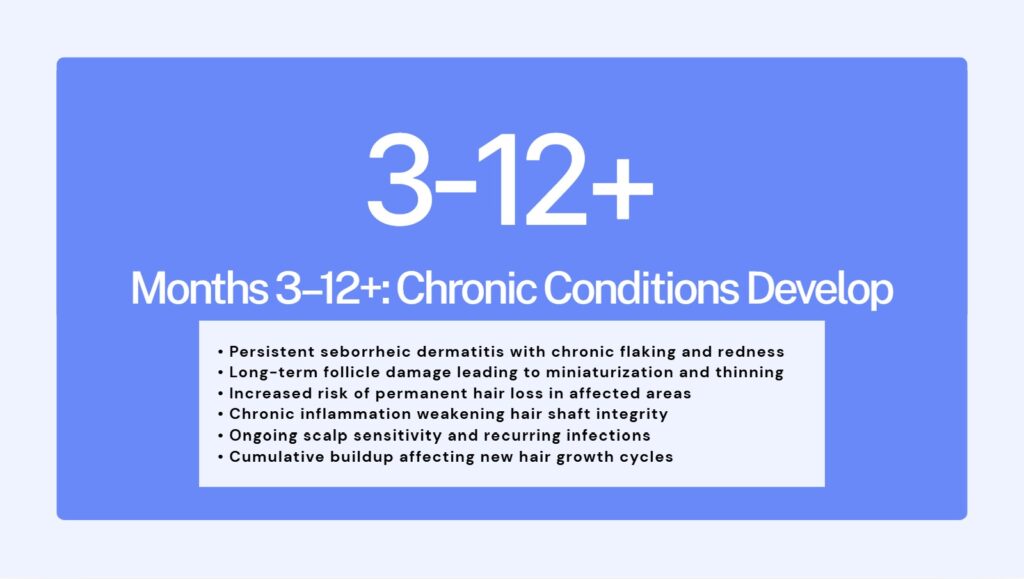
Neglect for months transforms temporary irritation into chronic pathology. Sebum and debris create a persistent occlusive environment, fostering biofilm. A biofilm is a sticky microbial community that is resistant to the body’s defenses. This leads to recurrent folliculitis or even worse infections requiring medical intervention. Seborrheic dermatitis becomes entrenched, with thick plaques, intense itching, and hair thinning in affected areas. The scalp microbiome remains dysbiotic. Malassezia and Staphylococcus dominate, while Cutibacterium declines, impairing barrier repair and vitamin synthesis. Also known as biotin.
Months 7-12 and Beyond: Irreversible Damage
Long-term, inflammation around follicles releases cytokines and free radicals that damage stem cells responsible for hair regeneration. In men genetically prone to male pattern baldness, this can shave years off the timeline of visible thinning. Scalp sensitivity increases; even mild styling products trigger reactions. Hair growth slows as follicles struggle for oxygen and nutrients beneath the buildup layer.
Psychological and social effects compound the physical. Greasy, flaky hair undermines confidence in professional or dating scenarios. Men report avoiding hats, helmets, or close-up photos. Over the years, untreated conditions may require dermatological treatments like prescription antifungals or steroids. Far more expensive and time-consuming than preventive care. Extreme cases (documented in no-wash experiments) include matted hair, sebaceous cysts, and permanent scarring alopecia if infections go unchecked.
Debunking the Myths on How Often Should I Wash My Hair
Social media promotes the “no-poo” movement. This movement encourages people to abandon shampoo altogether or to wash their hair every seven to fourteen days. Claiming it “balances” oil production and preserves hair. Proponents cite initial greasiness that supposedly resolves after a “transition period.” Science disagrees, especially for men. This is why debunking some myths is crucial.
The transition period is real. Overproduction of sebum on the scalp compensates for stripping. But for hormonally driven male scalps, equilibrium rarely returns without intervention. Studies show that prolonged low-wash frequency sustains elevated levels of Malassezia, inflammation, and oxidative stress. Precisely the factors that exacerbate hair loss.
Why “No-Poo” and Infrequent Washing Doesn’t Work for Most Men
The “No-Poo” trend may come with consequences. Dry shampoo, apple cider vinegar rinses, or baking soda alternatives offer temporary relief but fail to remove deep buildup or restore microbiome balance. One study of astronauts and expedition teams confirmed dramatic Malassezia spikes and symptoms with infrequent cleansing. For textured, coarse, or curly hair (common in some men), less frequent washing may suit length, but even then, scalp-specific cleansing every three to seven days is advised. Straight or fine hair, common in many men, demands more regular attention. The bottom line: infrequent washing does not “train” the scalp in the long term. It trains microbes to thrive in imbalance.
Reclaiming Scalp Health on How Often Should I Wash My Hair
Consistent washing, tailored to your lifestyle, removes sebum excess, dead cells, and microbes while preserving natural oils. Dermatologists recommend washing hair two to four times weekly for most men. Daily, if someone has oily hair or an active lifestyle. Use a gentle, sulfate-free shampoo focused on the scalp (not just the lengths), massaging for 60 to 90 seconds. Lukewarm water prevents stripping (aad.org).
The Power of Regular Washing and Professional Care
At m FOR MEN Salon and Spa, we elevate this with professional services. Our Scalp Detox Treatment uses clarifying agents and steam to dissolve buildup, followed by a microbiome-balancing mask. Hot towel therapies and LED light therapy reduce inflammation and stimulate follicles. Monthly deep-cleansing scalp facials (yes, the scalp needs facials too) prevent long-term issues. Clients who commit to salon routines plus at-home care report 80% less flaking, reduced shedding, and noticeably thicker hair within 90 days.
Practical Tips from Our Grooming Experts
- Assess Your Type: Oily/active? Wash every 2–3 days. Dry/coarse? Every 4–7 days.
- Choose Products Wisely: Look for salicylic acid or zinc pyrithione for dandruff-prone scalps; tea tree or charcoal for detox.
- Technique Matters: Part hair, apply to roots, rinse thoroughly. Condition mid-lengths only.
- Lifestyle Synergies: Manage stress (cortisol spikes sebum), eat omega-3s and zinc for scalp health, and use breathable hats.
- Monitor Progress: Track itch, flakes, and shedding. Persistent issues? Book a consultation.
Your Scalp’s Future Starts Today
Neglecting hair washing isn’t just about appearance. It is a slow erosion of scalp vitality that affects confidence, hair density, and overall well-being. The effects unfold gradually but relentlessly: from greasy roots to inflamed follicles to potential permanent thinning. Yet reversal is straightforward with knowledge and consistent care. At our men’s grooming salon, we don’t just cut hair, we restore and protect the foundation beneath it.
Book a complimentary scalp analysis today. Let our experts design a personalized regimen that keeps your scalp healthy for decades. Your future self—and your hairline—will thank you.